Why YouTube Sponsorships Keep Delivering After a Campaign Ends
A creator publishes a sponsored YouTube video.
The campaign launches. Views come in. Clicks are measured. A few weeks pass, and the campaign report is closed.
But there's one problem:
People haven't stopped watching the video.
Unlike formats that depend heavily on what is happening in a user's feed right now, YouTube videos can continue attracting viewers after publication.
And that changes how brands should think about the value of a YouTube sponsorship.
What Happens After the First 30 Days?
An analysis of 10,000 YouTube integrations found something particularly interesting:
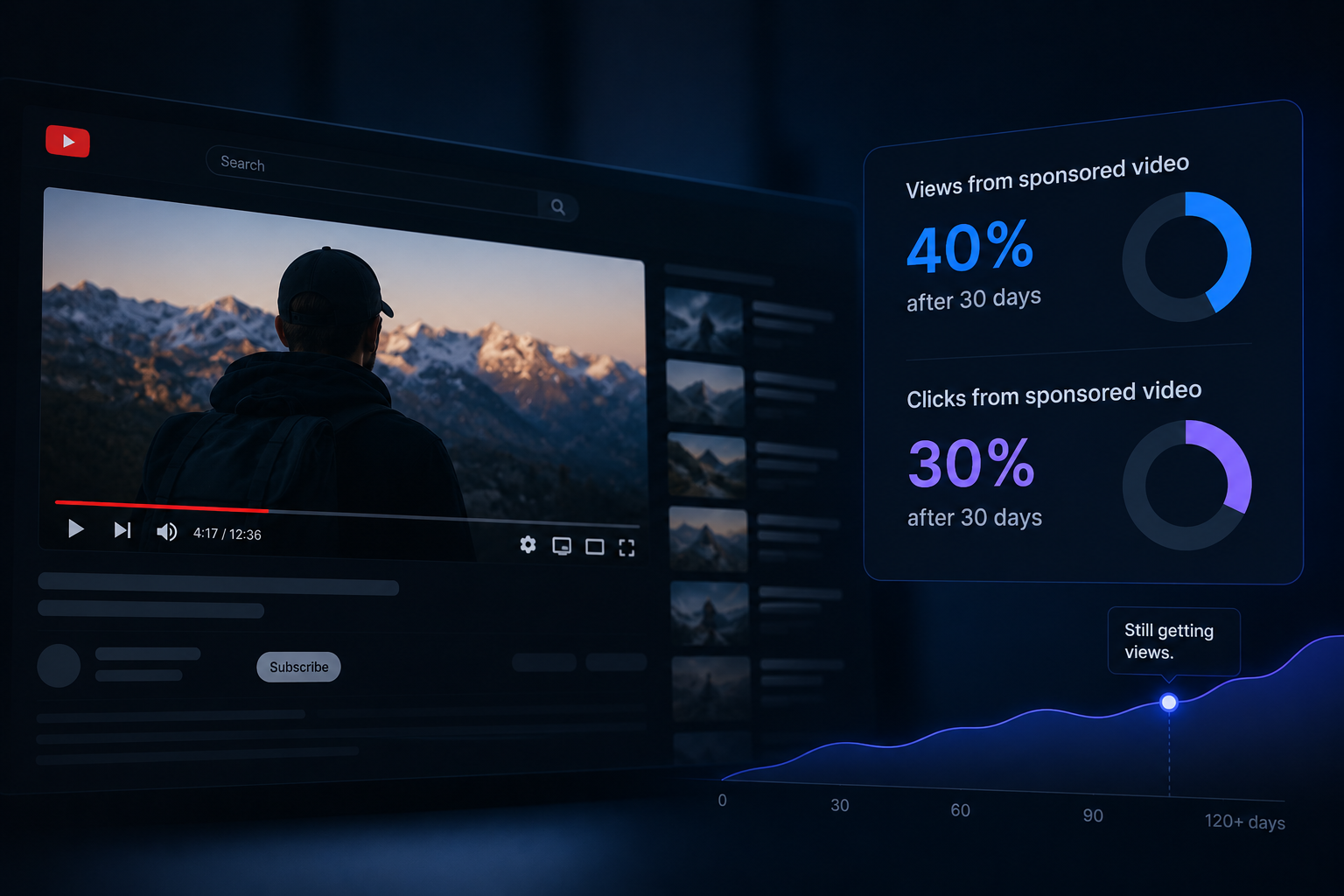
40% of views and 30% of clicks happened more than 30 days after the sponsored video went live.
In other words, a significant part of the activity generated by those integrations happened after the period many marketers might instinctively consider the main campaign window.
The sponsored content was already published.
The initial promotion was over.
But people kept finding and watching it.
Why Can Sponsored YouTube Content Have a Longer Life?
Think about how people use YouTube.
Someone might discover a video on the day it's uploaded.
Someone else might find it two months later through search, recommendations, the creator's channel or another video.
If the sponsorship is integrated into that content, the brand remains part of the video every time a new viewer discovers it.
A campaign might therefore have an official end date.
The sponsored content doesn't.
This becomes particularly interesting with videos built around topics that remain relevant over time.
A gaming hardware review, tutorial, comparison, product test or educational video may continue attracting viewers well beyond its publication date.
If the integration lives inside that video, its potential exposure can continue with it.
The First Month Doesn't Always Tell the Whole Story
This has an important implication for campaign measurement.
Imagine two sponsored videos.
One generates most of its views immediately and then quickly slows down.
The other starts more gradually but continues accumulating views for several months.
Looking only at their first few weeks could give you a very different impression than looking at their longer-term performance.
That's why a short reporting window can tell you what happened initially, without necessarily capturing everything the content ultimately delivers.
It doesn't mean brands should stop measuring early performance.
It means they should understand what that measurement represents.
A 30-day report is a snapshot, not necessarily the lifetime result of the sponsorship.
Think Beyond Launch-Day Performance
This also matters when selecting creators and content for a campaign.
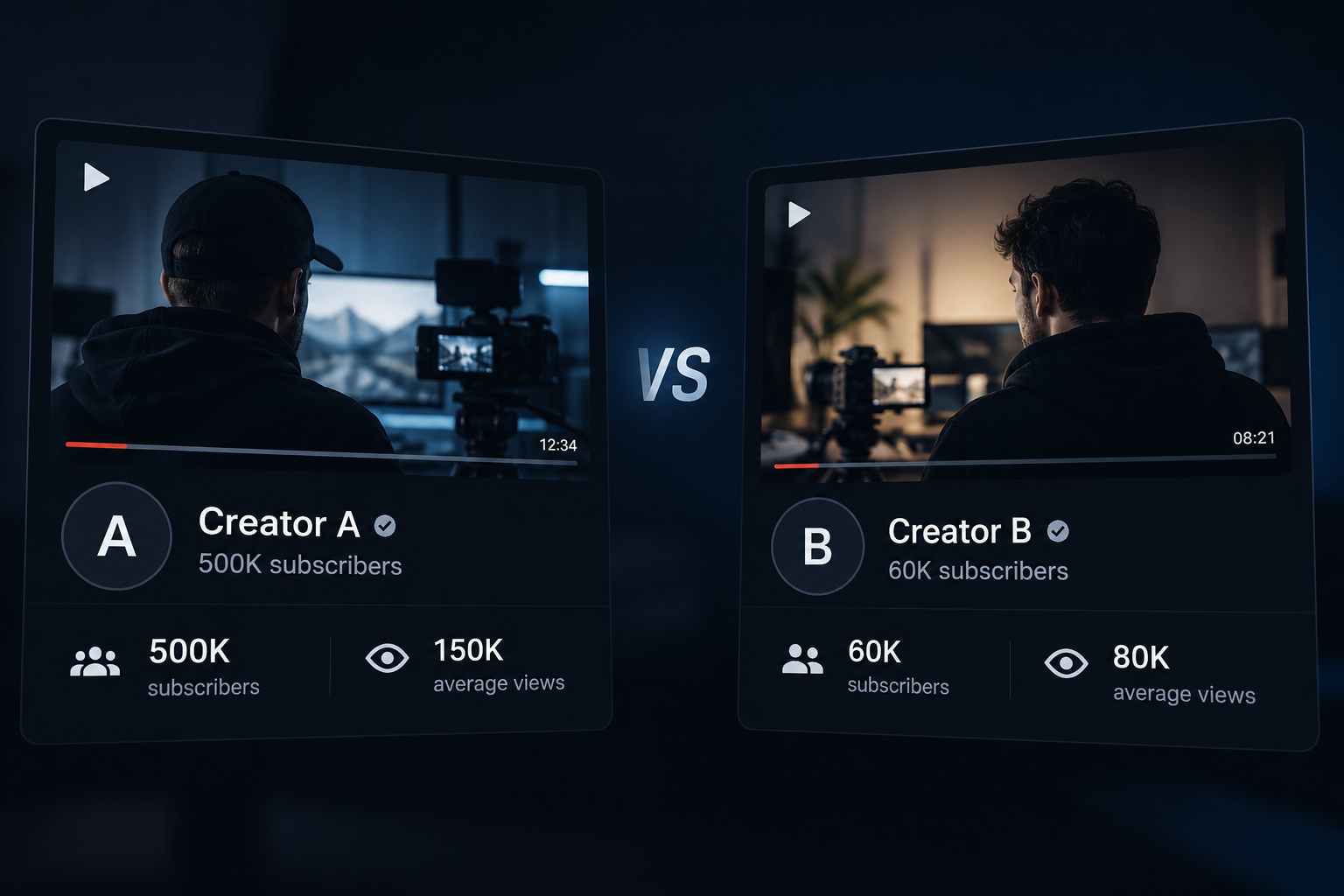
Average views are useful.
Expected reach is useful.
But brands can also ask:
→ Does this creator produce videos that continue getting discovered?
→ Are their topics relevant for weeks or months?
→ Does their back catalog still generate meaningful views?
→ Will the sponsorship remain naturally integrated when someone watches the video later?
A video with long-term discovery potential can create a different type of value from content whose performance is concentrated almost entirely around publication.
Neither is automatically better.
But they shouldn't necessarily be evaluated in exactly the same way.
Measure YouTube Like YouTube
One of the easiest mistakes in creator marketing is applying the same measurement logic to every platform and every content format.
YouTube has its own dynamics.
If sponsored videos continue generating views and clicks after the initial campaign window, brands should consider that when evaluating performance.
That could mean checking results again after 60 or 90 days, tracking longer-term views on important integrations, or simply recognizing that the first campaign report may not represent the video's final contribution.
Because when a campaign ends, the content doesn't disappear.
And sometimes, neither does its value.
At TalentFuse, we help brands plan and execute YouTube creator campaigns with a focus on finding the right creators and getting more value from every integration.